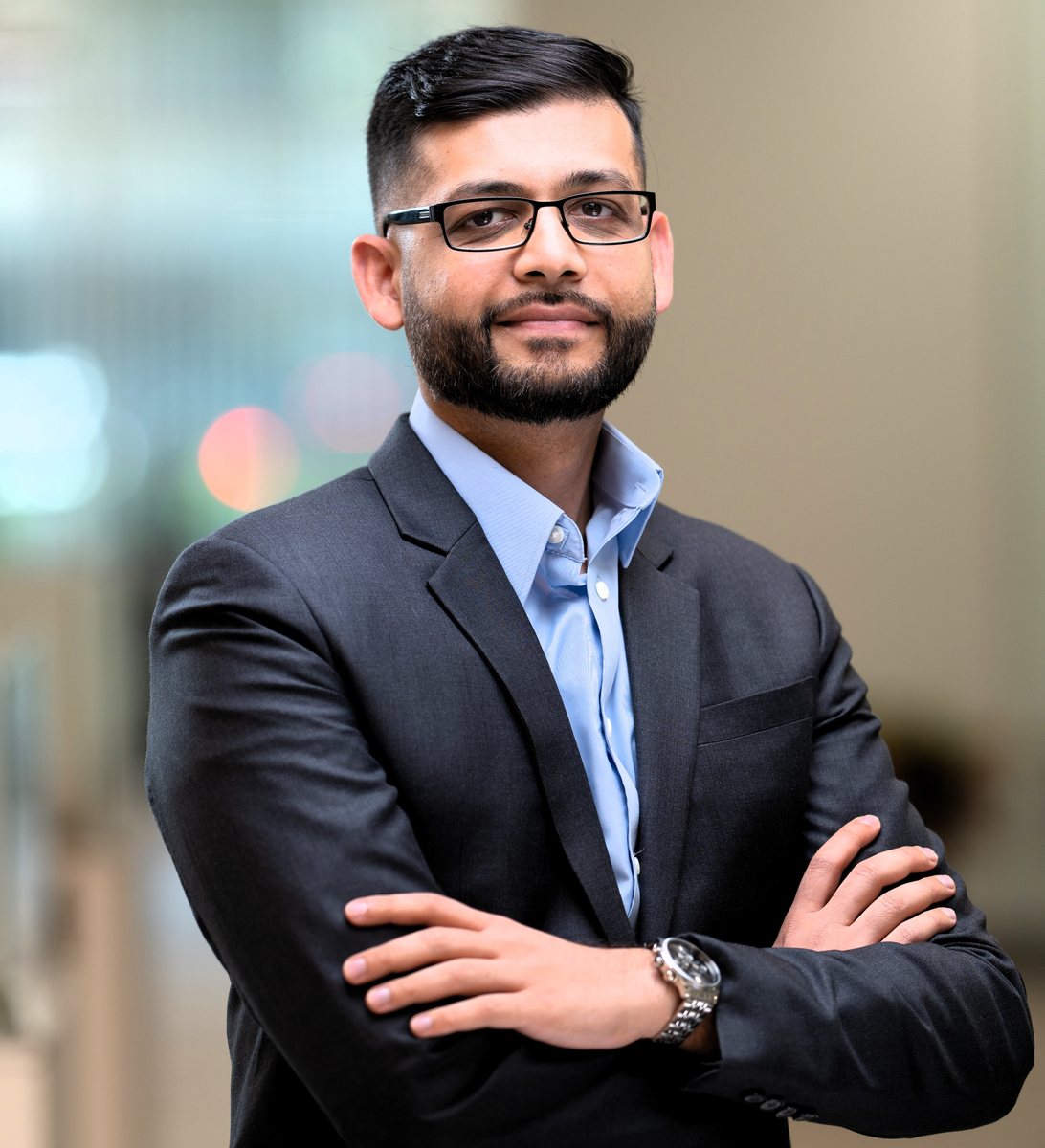
Twenty years between the model and the boardroom.
Fractional AI leadership for private credit funds, insurers, asset managers, and the platforms consolidating them: firms that can’t justify a full-time AI executive and can’t afford to get AI wrong.
FSA, FCIA · 5 data & AI departments built from zero · 20 years in regulated financial services
01Your situation, probably
You run a firm where the valuable work happens in documents and judgment. The board says do something about AI. The vendors say do everything with AI. Somewhere between a stalled pilot, a data layer nobody fully trusts, and a regulator with new expectations, you need someone who has shipped this before, inside a firm like yours, in front of people paid to be skeptical.
02What I’ll tell you no on
Dashboards with no actions driven off of them. A chatbot because the board saw one. Any build the data can’t support yet. And when the right answer is a simple regression, not an agent, I’ll let you know.
03The thesis
The name is the thesis. Alpha doesn’t only come from markets. It comes from operations: the speed a submission is quoted, the days a covenant check takes, the accuracy a reserve is held to. Most AI vocabulary (evals, agents, harnesses) is a fancy wrapper on simple ideas. The hard part was never the demo. It’s the data underneath, the governance around it, and the last mile into a real decision.
04The record
Most recently I was Managing Director of Data & AI at Preston Capital, a multi billion dollar alternative asset manager, reporting to the CEO. I joined as employee #12, before the firm had a data function; the company grew 5x while I was there. Over the following years my teams put 34 data and AI systems into production, and the platform they powered carried the portfolio to deliver $4.1B in realized value. the managed book grew 91% over my tenure. The data and AI capability became one of the first things the firm showed institutional investors.
The models weren’t experiments. They were retrained years into production, which teaches you things no pilot ever will. People need explainability before they’ll act on a score. An underwriter who can’t see why will ignore the model, and should. Speed to serve matters. API contracts matter. Edge cases arrive as soon as you have pushed to production, data drifts, users make mistakes, requirements turn out to be wrong, and someone has to handle all of it in real time inside a HIPAA- and SEC-regulated environment. I’ve been that someone. It’s why my definition of “done” is a system your team runs without me, with documentation an examiner can read.
The data platform came first. The headline results were only possible on top of it.
We 10x our data sources, including 1.5 billion claims on 77 million individuals that only a handful of firms held, and resolved everything to a single source of truth. The mortality models built on top ran were the best in the industry. Why? All because we spent the time to get the data in order. Which is why, when a client asks me to start with the use-case list, I usually ask to see the data layer instead.
Before that: ten years at Manulife Financial, ending as Director of Advanced Analytics, moving from traditional actuarial work into predictive modeling. The company’s first predictive modeling study on customer behavior. The global analytics center of expertise, built with the Chief Analytics Officer, spanning 160 practitioners on three continents. The technical risk review that cleared John Hancock’s accelerated underwriting model to launch. Experience studies that produced reserve accuracy improvements totaling $754M: balance-sheet numbers, signed off by the people whose job is to find the flaw.
Today, alongside Operating Alpha engagements, I serve as Chief Data Officer at Altriarch Asset Management, a private credit platform scaling from $450M toward $3B, building the unified data platform and running their first AI hire.
Track record at a glance
| $4.1B | Realized value, AI-driven platform portfolio |
| $754M | Reserve accuracy improvements, global insurer |
| $440M | Asset pricing precision, from a more accurate ML model |
| 99.9% | Digitization accuracy across 50M+ pages of regulated records |
| 34 | Data & AI systems shipped to production |
| 160 | Largest organization led, across three continents |
05Credentials, and when they matter
Fellow of the Society of Actuaries, Fellow of the Canadian Institute of Actuaries. B.Sc. in Actuarial Science, master’s in management analytics. Actuaries were validating models and documenting assumptions long before AI made it a discipline with a name. For insurance clients that credential often decides whether a model gets adopted. For everyone else, the record above is the credential.
06How I keep this safe
Human sign-off wherever judgment matters. Golden-set evals before production, monitoring for drift after. Models validated by someone independent of whoever built them. Your data stays in your environment under your security practices, under NDA. Much of what we build is your competitive advantage and it stays yours.
07How I work
I lead strategy, architecture, and governance personally. Specialists handle the builds that need specialist hands, under my review. Having reviewed over 1,200 candidates, I’d argue picking the right specialist is itself one of the core skills you’re paying for. Engagements start with your people and your documents, never a framework deck. Every recommendation carries an impact estimate, a cost band, and a time to value. If an engagement ended tomorrow, you’d keep everything worth keeping.
Khurram Tehseen
Founder, Operating
Alpha · info@operatingalpha.ai · LinkedIn